Pages

July 18, 2016

Bees? ... Please!

I've long been attracted to bees. (Just hoping they're not too attracted to me.)
The magnificent architecture of the honeycomb and hive.
The hierarchy of their lives from the royal queen down to those ever-busy workers.
Not to mention the delicious honey, which I adore in my tea!

Here's a great quote:
Draw honey out of the comb of Scripture and live on its sweetness. 
~Charles Spurgeon 

I had a wonderful opportunity to visit a beekeeper & see his honey bees.
You can see my photos and read the post: My Honeybee Adventure!

I also like bee art: patterns, prints and the bee motif on anything and everything.
I have a board on Pinterest called "Bumblebees, Honeybees" that you can check out.

Enjoy this gathering of bees!


roadsiderose


Walter Inglis Anderson


DeepColouredWater


A ceramic tile from the Moravian Tile Works in Bucks County, PA.
See my blog post on this wonderful place -here.


Hester Margetson


Bridget Henry


sheaclay


Live Art Gallery Fabrics


Andreas Preis


And finally, sage advice from a honey bee~
thebuzzfromqueenb


July 7, 2016

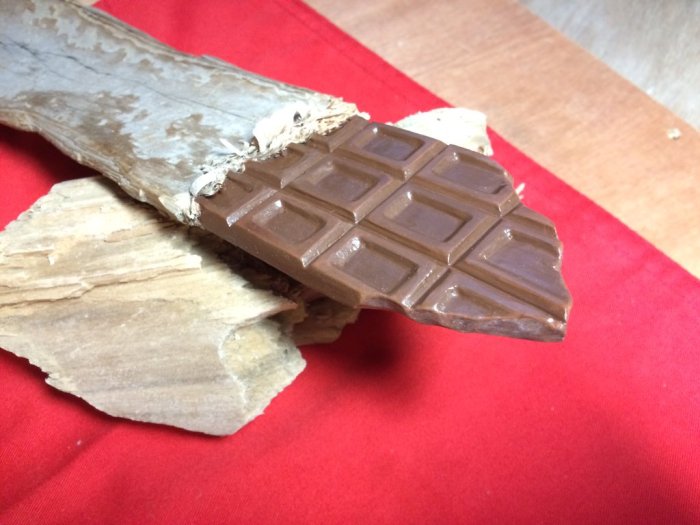
Seiji Kawasaki's Realistic Wood Carved Food


It's hard to believe that these wood sculptures aren't real food!
Seiji Kawasaki carves these pieces and paints them to totally fool us 
into believing that we could take a bite and not get splinters between our teeth.
That is real wood-carving talent if I ever saw it!


Chocoholics- this one's for you.


Please pass the French onion dip.


He puts these wooden veggies to use as chopstick holders.


 See more of Seiji's carvings at his website,
his Facebook page,
on Instagram & on Twitter.


Images used with direct permission from Seiji Kawasaki.

July 5, 2016

Our Riverboat Tour of Pittsburgh, Pennsylvania


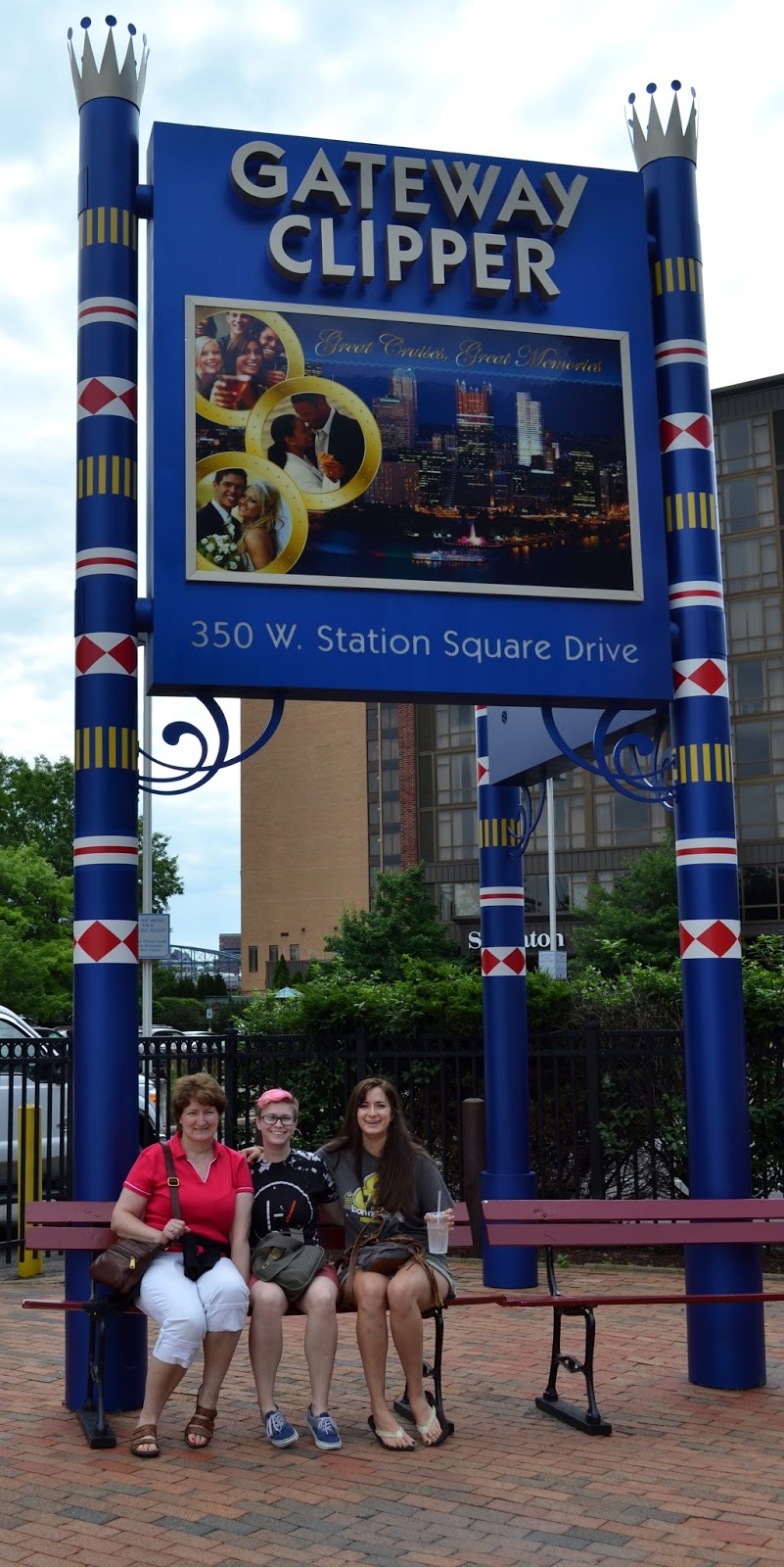
All aboard the Gateway Clipper's River Cruise
for a fantastic tour of Pittsburgh, Pennsylvania!
Since 1958, the Gateway Clipper fleet has hosted 
sightseeing cruises for over 25 million passengers.
What a perfect addition to our weekend! 


The city of Pittsburgh is situated at the 
juncture of the Monongahela and Allegheny Rivers; 
they meet to form the Ohio River.

We saw spectacular views of the city from different angles as we 
traveled down the Monongahela, or "The Mon," as it's nicknamed,
then turned up the Allegheny and back again.


Here's the beautiful fountain of the 36-acre Point State Park,
its water shooting 150 feet into the air.
North across the Allegheny River is Heinz Park.


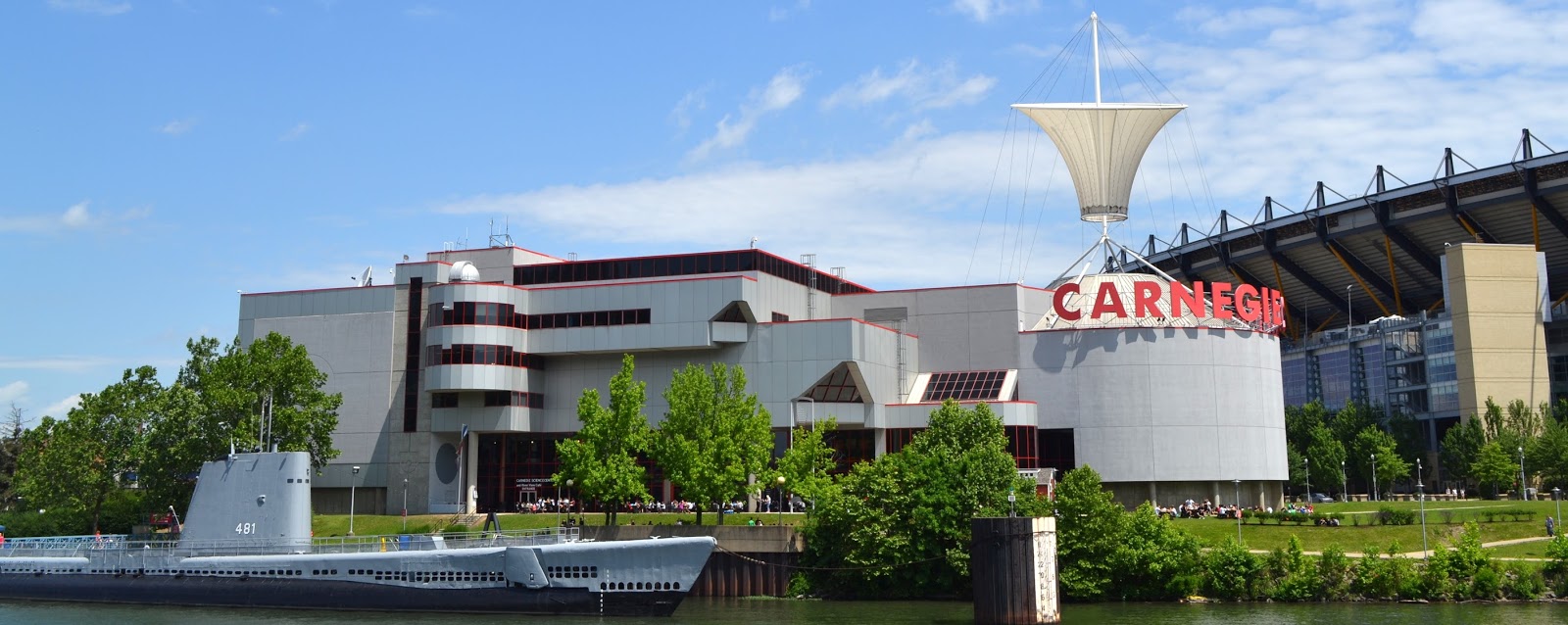
To the left of Heinz Park is the Carnegie Science Center,
with the USS Requin submarine in front.


Heinz Park is the hometown football stadium of
the Pitt Panthers and the Pittsburgh Steelers.
To the right, notice the stone wall with the oval center...


It's the Mr. Rogers Memorial, paying tribute to Fred Rogers,
of nearby WQED Studio's popular children's TV show, Mr. Rogers' Neighborhood.


And a close-up of the bronze statue of Mr. Rogers
in his famous shoe-tying pose. He passed away in 2003.

francineinretirement


Farther up, we saw PNC Park, home of the Pittsburgh Pirates.


More city views-


Passing under the identical Three Sisters Bridges on the Allegheny:
The Roberto Clemente, The Andy Warhol, and The Rachel Carson.
Why the yellow paint? It's called "aztec yellow," 
chosen for the gold (& black) of Pittsburgh's sports teams.


Heading back toward The Point, we can see
The Duquesne Incline across the Monongahela,
with Mount Washington at the top of the hill.


A closer view of the Incline, which we rode and loved!
(A link to that blog post is listed below.)


Here's a photo of something that I'd found so fascinating:
the waters of both rivers coming together at the confluence.
You can see the different colors of each river's water,
soon blending to become the Ohio River.


A terrific front-on shot of Pittsburgh!


More views of the city, and soon our one-hour cruise came to an end.


Our captain and tour guide told us so many interesting details!
I'd absolutely recommend the Gateway Clipper 
river tours to anyone visiting Pittsburgh!


Some links for more information:


Links to more of my Pittsburgh blog posts:


July 3, 2016

Washed Ashore's Marine Debris Sculptures


Look closely and you'll see that this fearsome shark
is made from a conglomeration of flotsam and jetsam.
It's constructed entirely of marine debris.
Not primarily stuff that was left behind on the beach.
According to the non-profit organization Washed Ashore,
80% of marine debris comes from the land.
That means "streets to streams to rivers to oceans."

Washed Ashore's goal is to educate folks about 
plastic pollution and its dangerous impact on marine habitats.

300 million pounds of plastic are produced every year; 
not even 10% of that ends up being recycled.
Those are eye-opening numbers, my friends.

So take a look at what Washed Ashore has been up to:
Trash is collected from oceans and waterways all over the globe.
From this trash, they build huge sculptures of sea life, 
particularly those species that have been affected by this pollution.
It's amazing art that's a powerful illustration of the enormity of the problem.
The goal is to encourage a change to a more environmentally-minded way of living.


Here's a blue marlin, with a close-up photo below:


School children encouraged to touch and interact as they check out this sculpture,
with the hope that the experience will leave a lasting impression. 
.


To learn much more, make a donation, 
and find or set up an exhibit, 
visit the Washed Ashore website & Facebook Page.


June 27, 2016

Wowed by the Nationality Rooms at Pitt's Cathedral of Learning


The centerpiece of the University of Pittsburgh is no doubt The Cathedral of Learning.
A well-known landmark, it's listed in the National Register of Historic Places.
It stands 535 feet tall and was built during the late 20s and early 30s
in the Late Gothic Revival style of architecture.
This colossal room was given to the university by Andrew Mellon.

On the first floor, students can study in the impressive Commons Room,
which covers a half acre and whose ceilings soar to 4 stories.
(Definitely reminiscent of the Main Hall in Harry's Hogwarts Castle.)


On the Cathedral's first and third floors are 30 Nationality Rooms.
Since Pittsburgh had a large population of immigrant families, 
the rooms were designed to pay homage to the various heritages 
that the students brought from their home countries.
Classes are still held in these rooms today.

My photos show just a handful of the rooms and their spectacular features.
They give only a taste of the fascinating details and craftsmanship in each one.


The chair backs in the Swiss Room represent Switzerland's 26 cantons or states.
There's a beautifully carved wood frieze all around this room.


The ceiling of the Hungarian Room features a folk motif and is the color of paprika.


A 16th century tapestry is in the French Room.


The English Room features stained glass windows with coats of arms 
honoring an English city, famous person or historic subject.


In the Turkish Room, a mural of Istanbul behind glass windows gives the impression
of an outside view, a common practice in Turkish architecture.
Notice, too, the fold-down desks that flip back seamlessly into the room's decor.


In the Czechoslovak room, an artist from Prague created this fresco
of a miracle tree having branches with a variety of leaves, fruit & flowers.


Architecture of 5th century Athens is represented as a temple in the Greek Room.


A beautiful mosaic in the Romanian Room commemorates the 
martyrdom of Prince Constantin Brancoveanu and his 4 sons, 
who refused to renounce their Christian faith and convert to Islam.


"When a guest enters the house, God enters the home." 
This proverb reflects the importance of hospitality to Ukrainians, 
and is represented in the Ukrainian Room as a home of an 18th century nobleman. 


Beautiful windows in the Polish Room feature coats of arms of Polish universities.


The formal Austrian Room highlights Austrian musical compositions such as 
Franz Gruber's "Silent Night" and Joseph Haydn's "Emperor's Song," which was 
both Austria's and Germany's national anthem for a period of time, 
and currently serves as the University of Pittsburgh's alma mater.


Wood carvings of Irish wolfhounds adorn the chairs in the Irish Room.


A beautiful floor mosaic graces the Israel Heritage Room, 
which was modeled after a Galilean home from the 1st century.


The most recently added Nationality Room is the Korean Heritage Room.
Its design was inspired by Seoul's Hall of Enlightenment in the Royal Academy.


An immense amount of information can be found
at the Nationality Rooms website.

If you're heading to Pittsburgh, I encourage you
to add this to your list of places to visit!


Would you like to read more of my Pittsburgh posts?